

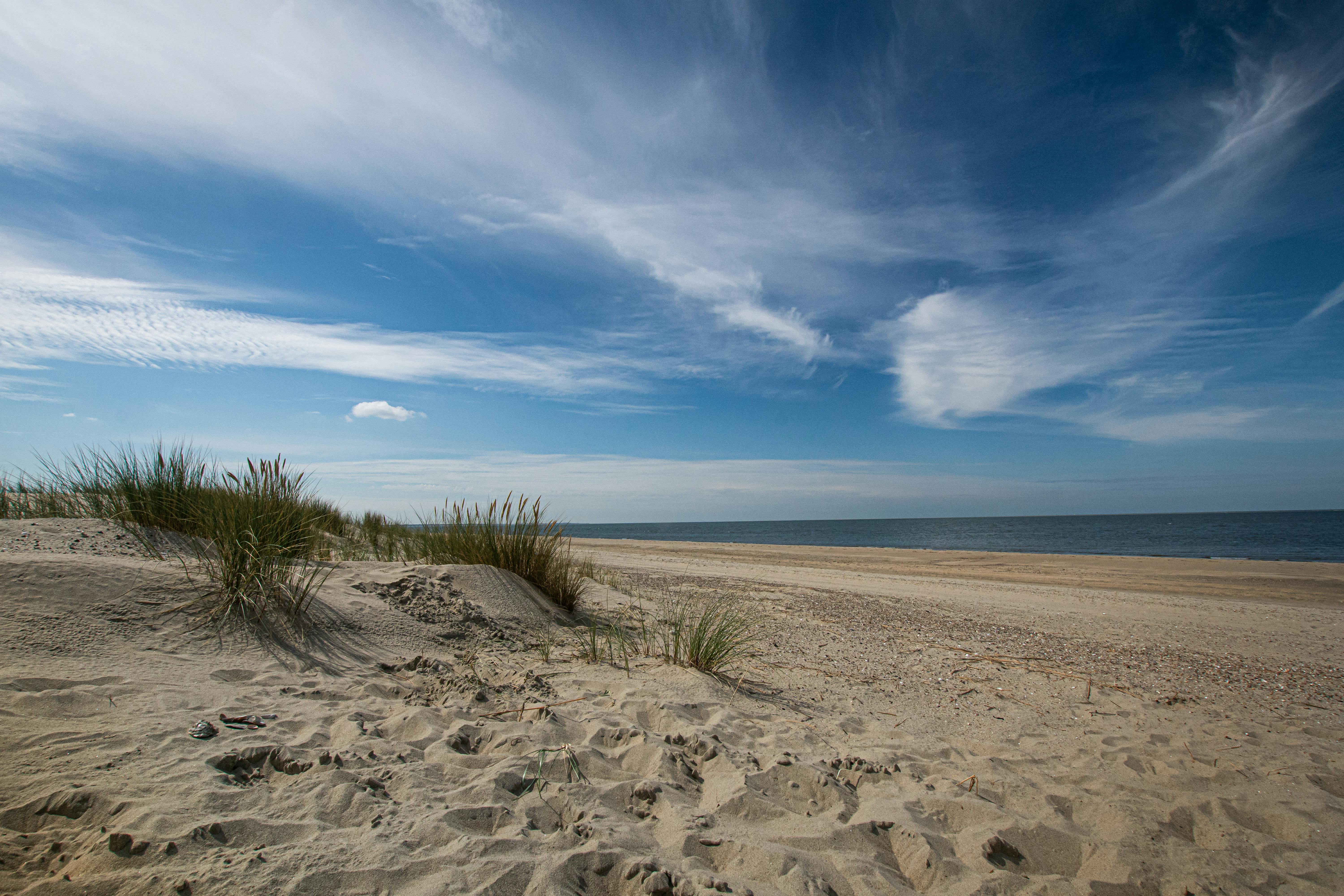






Volunteer Marsh Planting and Restoration Project
Nueces
Coastal Management Program (CMP)
Coastal Bend Bays Foundation
The Coastal Bend Bays Foundation (CBBF) will develop a new annual program for marsh planting and restoration in the Coastal Bend. As a consequence to performing this program, the CBBF also plans the development of a volunteer corps which provides an opportunity for the community to come together to conduct on-the-ground activities.
Texas High School Coastal Monitoring Program
Coast Wide
Coastal Management Program (CMP)
University of Texas
University of Texas, Bureau of Economic Geology
The Texas High School Coastal Monitoring Program (THSCMP) engages people who live along the coast in the study of their natural environment. High school students, teachers, and scientists work together to gain a better understanding of dune and beach dynamics on the Texas coast. Scientists from The University of Texas at Austin provide the tools and training needed for scientific investigation. Students and teachers learn how to measure the topography, map the vegetation line and shoreline, and observe weather and wave conditions.
Science & Spanish Club Network: The Only Barrier Along the Texas Coast are Islands
Lower Coast
Coastal Management Program (CMP)
Gulf of Mexico Foundation
The Gulf of Mexico Foundation’s (GMF), Science & Spanish Club Network, (SSCN) is an ecosystem-based and multi cultural approach to coastal environmental education established in 2000. This project proposal, “Science & Spanish Club Network: The Only Barriers Along the Texas Coast are Islands” continues to build upon previously CMP funded projects. This project also builds upon the successes of past and present collaborations with a mix of working partnerships that continue to strengthen the SSCN sense of confidence in carrying out activities that lead to tasks deliverables.
Rain Gardens: Mitigating Runoff Pollution for Coastal Texas
Upper Coast
Coastal Management Program (CMP)
Texas AgriLife Extension
The WaterSmart Program of the Texas AgriLife Extension Service, part of the Texas A&M University System, will conduct a concerted educational and outreach initiative that includes the installation of a minimum of three demonstration rain gardens in high visibility areas. These will be easily accessible public displays with accompanying signage that clearly show the environmental and aesthetic benefits rain gardens provide. In addition, a how-to manual, addressing the unique soils, topography, and hydrology of Texas coastal communities would target residential and commercial entities.
Public Education and Outreach for Clean Beaches
Nueces
Coastal Management Program (CMP)
Nueces County
The Nueces County Coastal Parks Department will develop a comprehensive public awareness and educational outreach program focused on promoting sound responsible environmental stewardship targeting the problem of littering and illegal dumping focused on both youth and adult audiences within the Coastal Bend area. Initially the program would focus efforts in the communities of Aransas Pass, Port Aransas, Corpus Christi, Ingleside, and North Padre Island.
Identifying Ecologically Effective Wetland Restoration Techniques in Coastal Wetlands
Upper Coast
Coastal Management Program (CMP)
Texas A&M University at Galveston
Texas A&M University at Galveston (TAMUG) will compare several restored brackish tidal wetlands that were or will be constructed in different formations from a variety of soil sources. These restored wetlands, located at the Old River Unit within the Lower Neches Wildlife Management Area (Texas Parks and Wildlife Department, Port Arthur, Texas), are in close vicinity to each other and are of similar age, providing an ideal scenario for comparisons among marsh restoration techniques.
Harris County Seafood Consumption Advisory Public Education Campaign
Harris
Coastal Management Program (CMP)
Galveston Bay Foundation
The Harris County Seafood Consumption Advisory Public Education Campaign will focus on public education and outreach about the risks of human consumption of seafood contaminated with toxic substances within Harris County, particularly in low income areas and areas with a high concentration of immigrants in the eastern part of the county.
Captain Crab Clean Beach Media/Education Campaign and Puppet Show
Lower Coast
Coastal Management Program (CMP)
Valley Proud Environmental Council
Valley Proud Environmental Council will continue to educate residents of the Rio Grande Valley in Texas and northern Mexico and visitors to the beaches of South Padre Island and Boca Chica that it is unhealthy and unlawful to litter beaches.
Boater Waste Education Campaign
Upper Coast
Coastal Management Program (CMP)
Galveston Bay Foundation
The project involves the development of social marketing messages suitable for, but not limited to, personal communications via presentations and exhibits, print, billboard, and Internet use. GBF focuses on communicating the message directly to boaters and marinas. This has been achieved by contacting marinas to arrange special events, presentations, and/or exhibits where boaters will be exposed to the campaign message. The campaign emphasizes 1) environmental harm caused by raw sewage and 2) how boaters can properly dispose of their waste.
Texas Coastal Management Program Section 309 Assessment and Strategies Report 2011-2015
Coast Wide
Coastal Management Program (CMP)
Harte Research Institute for Gulf of Mexico Studies, Texas A&M University
Harte Research Institute for Gulf of Mexico Studies (HRI) will review and analyze NOAA’s revised guidelines for the 2011-2015 funding cycle, when they become available. Based upon these new NOAA guidelines, the previous Assessment and Strategy Report, and input from a core group, HRI will establish the scope and organization of the new Report. Throughout this process, HRI will coordinate its efforts with researchers associated with the Mission-Aransas National Estuarine Research Reserve to enhance collaborative opportunities and avoid duplication of study.
Quantification of Hurricane Surge Damage in Coastal Bays as a Function of Dune and Wetland Characteristics with Applications and Climate Change
Coast Wide
Coastal Management Program (CMP)
Texas A&M University - Texas Engineering Experiment Station
Texas Engineering Experiment Station will investigate the impact of coastal dunes and wetlands on mitigating hurricane impacts.
Cycle 6 Coast-Wide Aerial Photography
Coast Wide
Coastal Erosion Planning and Response Act (CEPRA)
General Land Office
The GLO will contract with vendors to obtain up-to-date aerial photography of the Texas coastal shoreline to help identify critical eroding areas by comparing previous aerial photography to current aerial photography, monitoring CEPRA project performance, delineating impacts from hurricanes and tropical storms, and supporting other studies such as the Bureau of Economic Geology's shoreline change study.
Economic and Natural Resource Benefits of CEPRA Cycle 5-6 Projects
Coast Wide
Coastal Erosion Planning and Response Act (CEPRA)
General Land Office
The CEPRA statute requires the Land Commissioner to evaluate the natural resource and economic benefits of CEPRA projects and report these measured benefits to the Texas Legislature for each biennium that the Legislature provides CEPRA project funding. This project will quantify economic benefits associated with representative CEPRA Cycle 5 and Cycle 6 construction projects, including calculation of storm damage reduction benefits and will provide an evaluation of natural resource improvement associated with habitat restoration and projection projects using established methodologies.
Shoreline Change-Hurricane Ike Shoreline Assessment-LIDAR Study
Coast Wide
Coastal Erosion Planning and Response Act (CEPRA)
General Land Office
The University of Texas – Bureau of Economic Geology will build on work conducted in previous CEPRA cycles to determine shoreline change rates and develop digital elevation models using aerial photography and LiDAR surveys to assess Hurricane Ike-induced shoreline change. The CEPRA statute mandates this work for reporting to the Legislature.
Effects of Hurricane Ike Study, Phases 2-3
Brazoria
Coastal Erosion Planning and Response Act (CEPRA)
General Land Office
This project will build on the Phase I study completed in April 2009 during CEPRA Cycle 5 which documented the impacts on, conditions and recovery of the gulf-facing shorelines of the upper Texas coast immediately after the landfall of Hurricane Ike.
Sylvan Beach, Shoreline Protection
Harris
Coastal Erosion Planning and Response Act (CEPRA)
City of La Porte
City of LaPorte
This project consisted of an alternatives analysis for a stretch of shoreline located along the historic Sylvan Beach area, within the City of La Porte in Harris County. The alternatives analysis evaluated methods of slowing the shoreline retreat of an area approximately 2,000 feet in length through the use of engineered shoreline protection structures as well as enhancing public access to the shoreline. The incorporation of a recreational beach to replace the historic beach lost to erosion was also considered.
Sylvan Beach Shoreline Protection & Beach Nourishment
Harris
Coastal Erosion Planning and Response Act (CEPRA)
City of La Porte
City of LaPorte, Harris County
The project constructed a revetment and pocket beaches enclosed by rock groins at a popular recreational bay beach. CEPRA funds were combined with City of La Porte and Harris County funds to construct the project that was designed and permitted during CEPRA Cycle 2 (FY02-03).
Rollover Pass Beach Nourishment w/Beneficial Use of Dredge Material
Galveston
Coastal Erosion Planning and Response Act (CEPRA)
Galveston County
This project will be conducted under a cooperative agreement with the U.S. Army Corps of Engineers to beneficially use beach quality sand produced by the USACE during its maintenance dredging of the GIWW to renourish the beaches adjacent to Crystal Beach and possibly other segments of Bolivar Peninsula around the Rollover Pass area.
Jamaica Beach - Beach Nourishment and Dune Restoration
Galveston
Coastal Erosion Planning and Response Act (CEPRA)
City of Jamaica Beach
During Cycle 3, preliminary engineering and permitting tasks were conducted for a beach nourishment project that will restore the eroded beach at the City of Jamaica Beach on Galveston Island. Because construction was postponed until after the 2005 turtle-nesting season, the construction phase of the project was carried forward into Cycle 4. The dune restoration phase of the project was completed in August of 2006. The beach nourishment phase could not be constructed during Cycle 4 due to sand source and USACE permit issues.
Jamaica Beach- Beach Nourishment
Galveston
Coastal Erosion Planning and Response Act (CEPRA)
Federal Emergency Management Agency (FEMA)
City of Jamaica Beach
This project will restore the beach site to pre hurricane Ike condition by placing beach quality sand on Jamaica Beach.